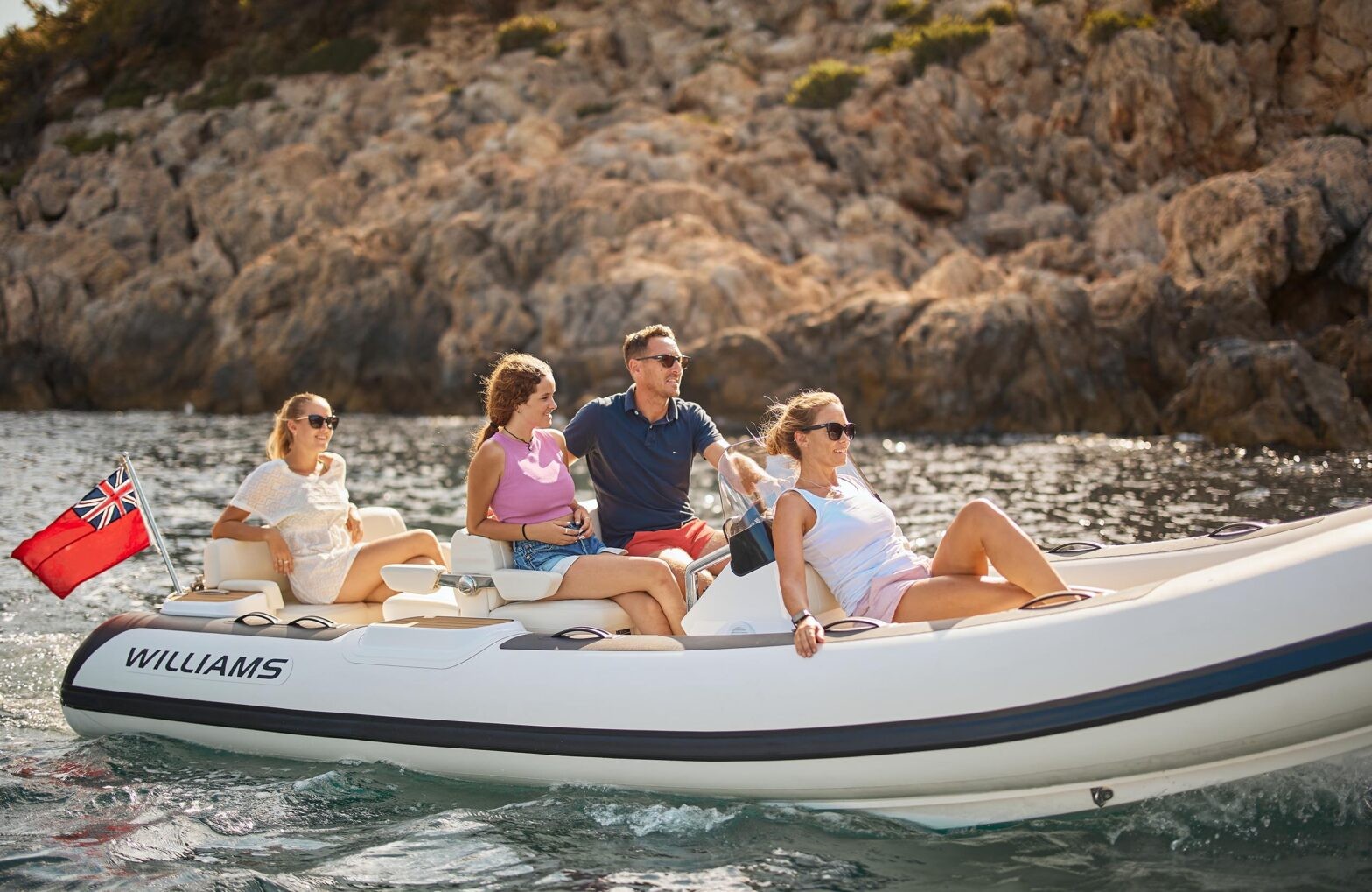
Choosing the perfect tender for your yacht is more than a matter of aesthetics; it is a technical decision that impacts your yacht’s operation, your guests’ comfort, and your water-based activities. In this guide, we compare two compelling models, the DieselJet 445 and the SportJet 460. While they occupy a similar footprint, these two crafts are tailored for slightly different functions depending on your preferences. We will break down the technical specifications and performance to help you make an informed decision.

Quick Comparison between the DieselJet 445 and SportJet 460
| Feature | DieselJet 445 | SportJet 460 |
| Overall Length (LOA) | 4.50 m | 4.59 m |
| Beam | 2.00 m | 2.01 m |
| Dry Weight | 875 kg | 625 kg |
| Overall Height | 1.40 m (1.06m in LP with windscreen folded) | 1.42 m (1.13m with windscreen folded) |
| Engine | Yanmar 4JH 110hp Diesel | Rotax ACE 1603 170hp Petrol |
| Fuel Tank | 68L | 100L |
| Seating | 7 + 1 people | 6 people |
| Max Speed | 40 mph (64 kph) | 48 mph (77 kph) |
| Typical Yacht Fitment | Yachts 25+m | Yachts 25m+ |
What is the main difference between these yacht tenders?
While the DieselJet 445 is diesel-powered, making it efficient for tender operations and guest transfers, the SportJet 460 is petrol-powered, which suits high-performance running and watersports activities.
DieselJet 445
- Highly suited for the crew to perform daily tender operations efficiently.
- Luxurious and comfortable interior, making it an elegant guest experience on board.
- Multiple boarding points for an enhanced user experience.
- A dry ride for guests in certain conditions, with added weather protection options.
- Complements the parent yacht with personalised tube and upholstery logos.
- Additional accessories include fresh water shower and shorepower.
- Single point lift option and ability to specify custom lifting points means seamless yacht integration.
SportJet 460
- Petrol-powered 170hp Rotax engine brings exhilarating performance.
- It’s responsive and agile, making it purpose-built for watersports, family adventures, and high-energy cruising.
- At 625kg, the SportJet 460 is a lightweight tender for its size, making it compatible with many yachts.
- Rotating backrest opens up sun pad area, and active footrest provides a stable ride for rear-facing passengers.
- Additional chartplotter available, as well as iDF (intelligent debris free).
Which fuel type suits yacht owners better?
Diesel suits owners focusing on operational efficiency and single-fuel systems, meaning the yacht doesn’t have to carry more than one fuel system onboard. Petrol tenders are usually more lightweight and offer higher performance compared to diesel tenders, which are more suited to efficient guest transfers and making longer passages more comfortable.
DieselJet 445 Offers Operational Harmony
- Powered by a 110 hp Yanmar 4JH diesel engine, this model appeals to owners who prefer a unified fuel system. Using the same diesel as the mothership simplifies refuelling and storage.
- Diesel delivers superior fuel economy compared to petrol, making it suited to longer passages.
- The layout and interior space have been designed to make guest transfers more comfortable, as well as seamless for the crew to perform daily operations.
- The compatibility of HVO 100 (Hydro-treated vegetable oil) is a more sustainable fuel option.
SportJet 460 Offers Performance
- Equipped with a Rotax ACE 1603 petrol engine, it delivers 170hp for genuinely exhilarating acceleration and sport-ready handling.
- Lightweight for a tender of its size, making it compatible with many yachts.
- With a larger 100L fuel tank, it enables extended watersports sessions and longer days exploring without refuelling stops.
How does weight affect performance for luxury jet boat owners?
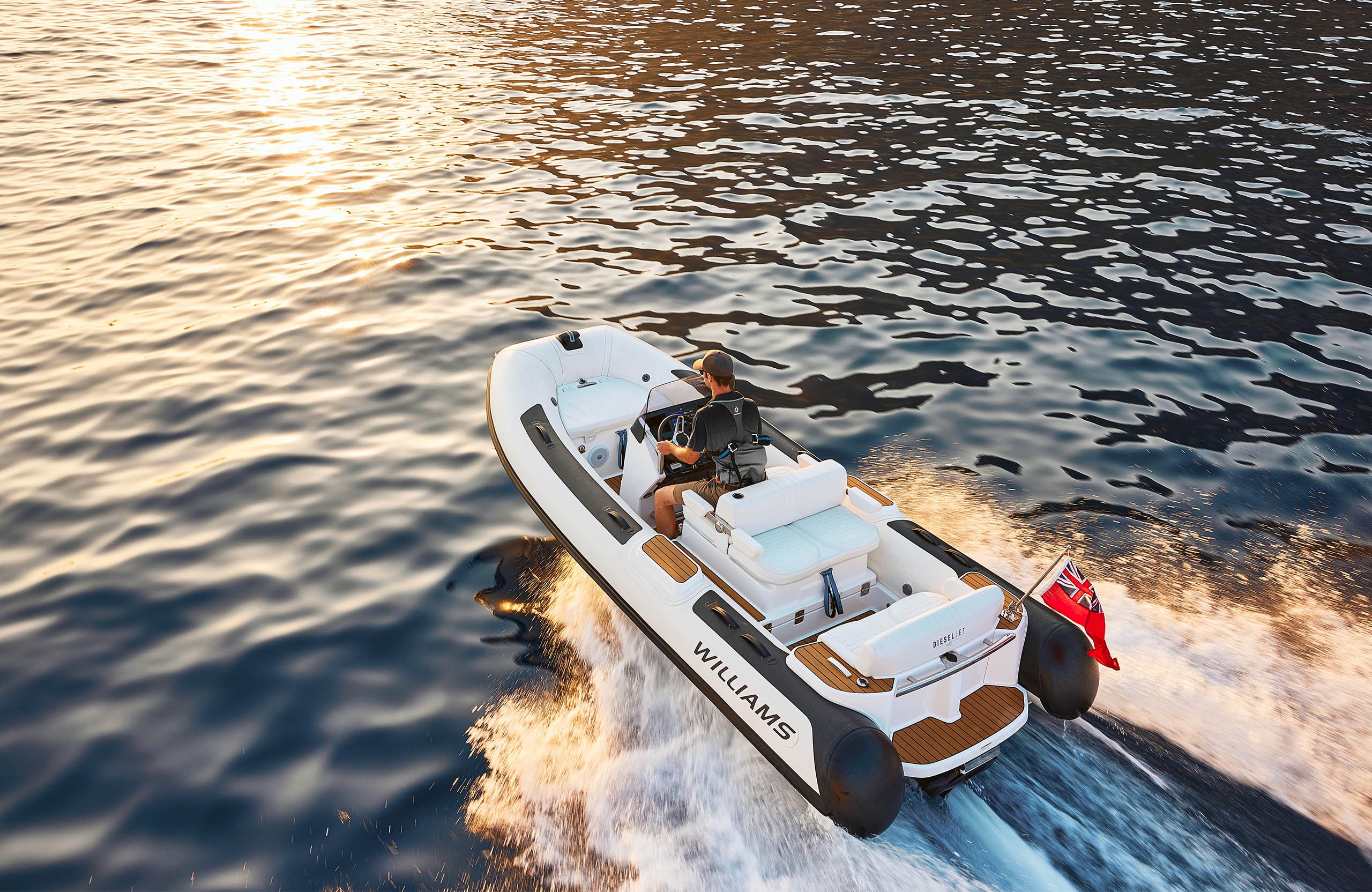
The DieselJet’s additional mass delivers confident, composed performance in choppy coastal waters. Its single-point lift and custom lifting point options provide seamless integration for yachts over 25m, whereas the SportJet 460’s 250kg lighter weight is ideal for yachts with limited crane capacity. Its lightweight design and 170hp petrol engine enable exhilarating performance with a top speed of 48mph, whereas the DieselJet achieves a 40mph top speed with superior fuel economy and greater seating capacity.
Can I customise these tenders to match my yacht?
Yes, every Williams tender can be tailored to mirror your mothership’s aesthetic. Both these models offer comprehensive customisation, including upholstery, teak decking, Raymarine navigation, Fusion audio and LED lighting.
DieselJet 445
The DieselJet is particularly well-suited to practical additions, such as fresh water shower, shorepower and different lifting arrangements based on the yacht’s requirements. Custom tube branding allows the owner to personalise their tender to match the parent yacht.
SportJet 460
The SportJet excels with the option of an additional chartplotter, as well as iDF (intelligent debris free), which is useful to clear any debris away from Williams’ high-performance petrol boats. The rotating backrest provides an extra space to relax on the water.
The result? Cohesive and elegant boat tenders perfectly suited to your needs – exactly how luxury should feel.
Which tender should you choose?
Choose the DieselJet 445 for:
- Single-fuel integration with diesel yachts
- Eight-person capacity
- Stable, refined guest transfers
- Operational efficiency and fuel economy
- Professional yacht operations
Choose the SportJet 460 for:
- Lighter 625kg weight (more compatible with lower safe working load limits)
- Exhilarating 48 mph performance
- Dedicated watersports capability
- Extended 100L fuel range
- Family adventure focus
There is no wrong choice, only the tender that best complements the experiences you want to create on the water. Explore the configurator
Share this story:


In other journals...
18 December, 2025
Choosing Between the MiniJet 280 and TurboJet 285
1 December, 2025
Williams Yacht Tenders for 40m+ Superyachts